Why MOS Burger's 100,000 figure cannot tell customers whose details leaked
MOS Burger found signs that online-order details leaked. Its figure of up to 100,000 counts entries displayed on an admin screen, including legitimate use and repeats for the same customer.

MOS Food Services found signs that customer details leaked after someone repeatedly accessed the administration system for its Japanese online-ordering service. Its 20 November notice puts an upper limit of 100,000 on the entries displayed on one screen. Entries displayed in the ordinary course of business from 11 October counted towards that figure. So did another entry for the same customer. MOS has yet to say how many people had their details exposed.
If you are trying to work out whether the notice applies, how and when you placed your order are more useful than that headline number. Some people who used online ordering from April 2025 onwards may be affected. That includes customers who ordered from their seats in a restaurant. MOS says it kept orders from March 2025 and earlier on a separate system, outside the scope of this incident.
Two dates on the order history
April 2025 is the dividing line for the order records. The investigation dates the intermittent unauthorised access to 11 October 2026. An order could therefore have been placed well before the earliest confirmed access and still fall within the period MOS is examining. Having placed an order in that period does not, on its own, establish that someone saw it.
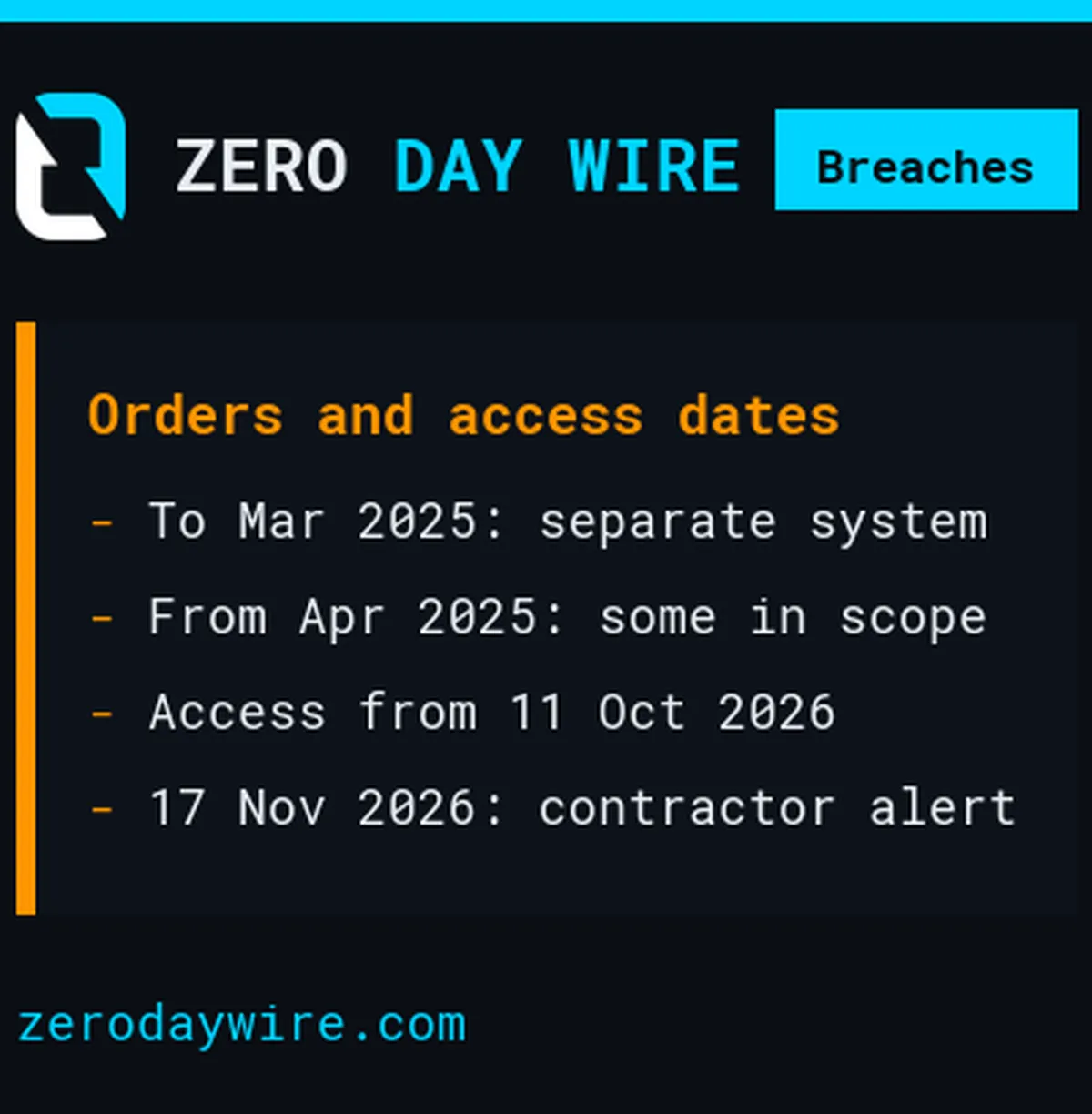
On 17 November, the contractor, who operated and maintained the system, reported that someone was registering unusual reservation orders. That report prompted MOS to investigate. The company says it restricted access to the administration system, cut off the route used to reach it and brought in outside specialists. Its notice leaves open how the intruder first got in and whether the unusual orders and the customer-information screen were connected.
For the people potentially affected, the details in question are the ones supplied with an order, including names, telephone numbers and email addresses. MOS says the screen neither displays nor stores credit card or other payment details, or members' login passwords. That distinction matters for a customer who receives a message about the incident asking them to enter a password or confirm a card number.
What the screen actually counted
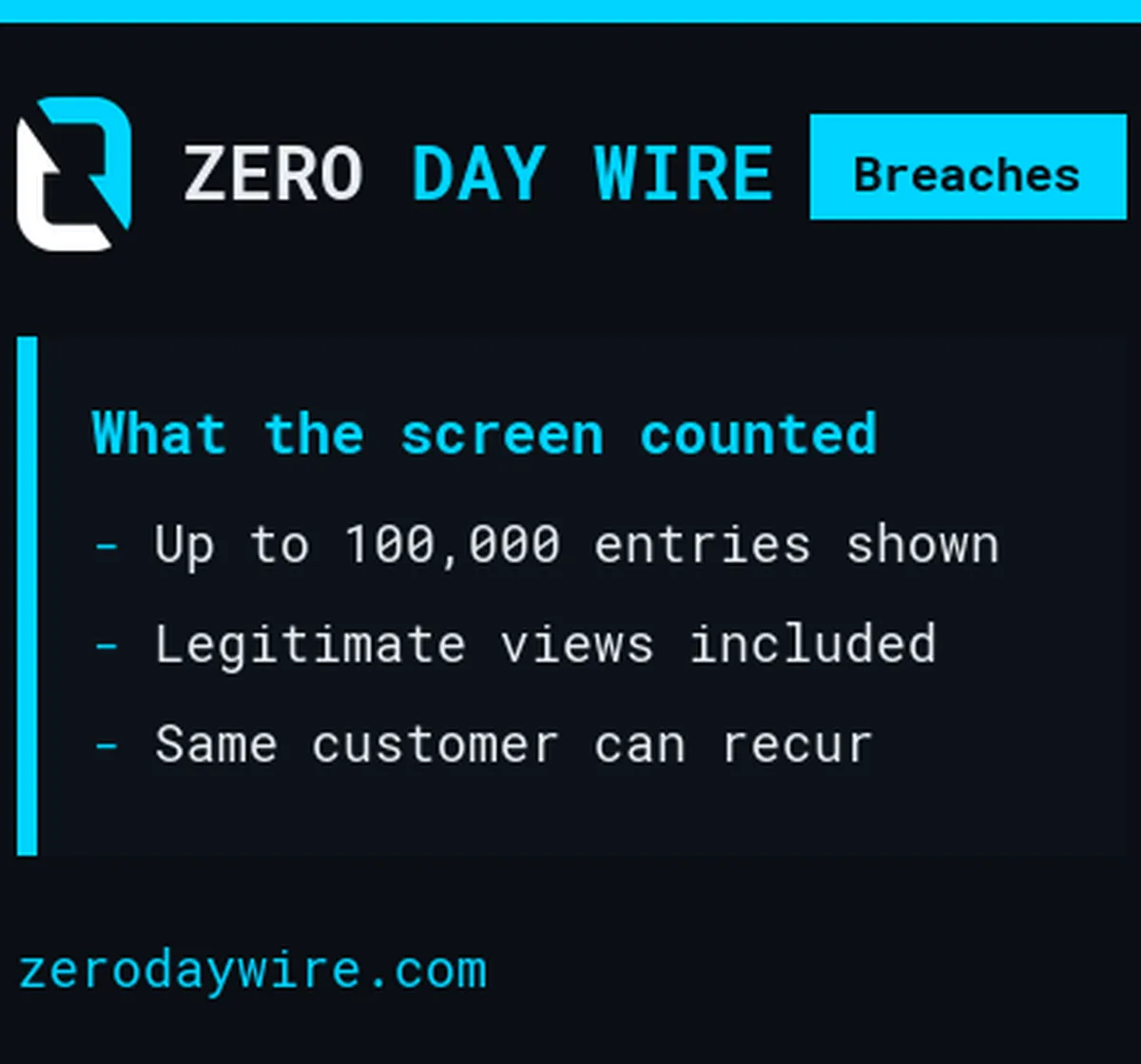
The note beneath the 100,000 figure explains the unit. MOS added up the data entries displayed in the administration screen from 11 October onwards. It explicitly included ordinary business activity and repeated entries for the same customer. A customer can therefore contribute more than once. A legitimate lookup can contribute even when the intruder had nothing to do with it.
MOS found signs that personal information left the company. It gives no separate figure for entries displayed to the intruder, or for the different people to whom those entries belonged. There is no way for a reader to recover either number by subtracting one known quantity from the headline total. MOS says it plans to contact customers individually once it identifies them. Its notice gives no date for those messages.
For an order-system operator facing the same question, it is worth asking what the team could actually establish from its records. Can it separate routine work from the access under investigation? If a customer ordered several times, can the team recognise the same person across those entries? Those are different questions. If the records answer only the first one, reporting a number of people would still require evidence the team does not have. MOS has not described what its own logs record.
Which MOS notice applies?
There is another figure in circulation that an online customer could easily mistake for this one. In a separate disclosure on 4 November, MOS reported 7,517,087 entries in an incident involving the service used to send email to MOS WEB members. That disclosure concerns a mailing system. The 20 November figure concerns entries displayed in the order administration system. Adding them together would produce a number that describes neither incident.
A person who signed up for member emails and also ordered online may have reason to read both notices. Receiving member emails alone does not establish that the person had an order in the system covered by the newer notice. Equally, the question for someone who ordered from a restaurant seat is how they placed the order. An online order for food eaten in the restaurant is among the kinds of order MOS describes.
Before the contractor calls
For the ordering service, MOS says it had confirmed safe operation for ordinary customers by 20 November. At that date it had confirmed no further harm from misuse of the information. It asks customers to delete suspicious emails or text messages claiming to be from MOS, avoid their links and hang up on suspicious calls without supplying personal information. Anyone with a question can reach MOS through its online-order support form. There is no need to follow a link sent by someone claiming to be investigating the breach.
The contractor's report on 17 November gives other operators a practical starting point. Ask the team that handles unusual orders who it would call, and ask the team responsible for customer records what it could establish about the accounts and entries involved. In its 20 November notice, MOS says it will review access control, permissions and monitoring in light of the investigation. Its notice explains why the distinction between entries displayed and people affected matters to the customers now waiting to hear from it.