Mail Shonin breach exposed past mailings as well as subscriber addresses at Waseda
Waseda confirmed that all 708 addresses on its Mail Shonin list and the contents of previous mailings leaked. Other senders need to check which campaigns and subscriber fields were exposed in their own accounts.

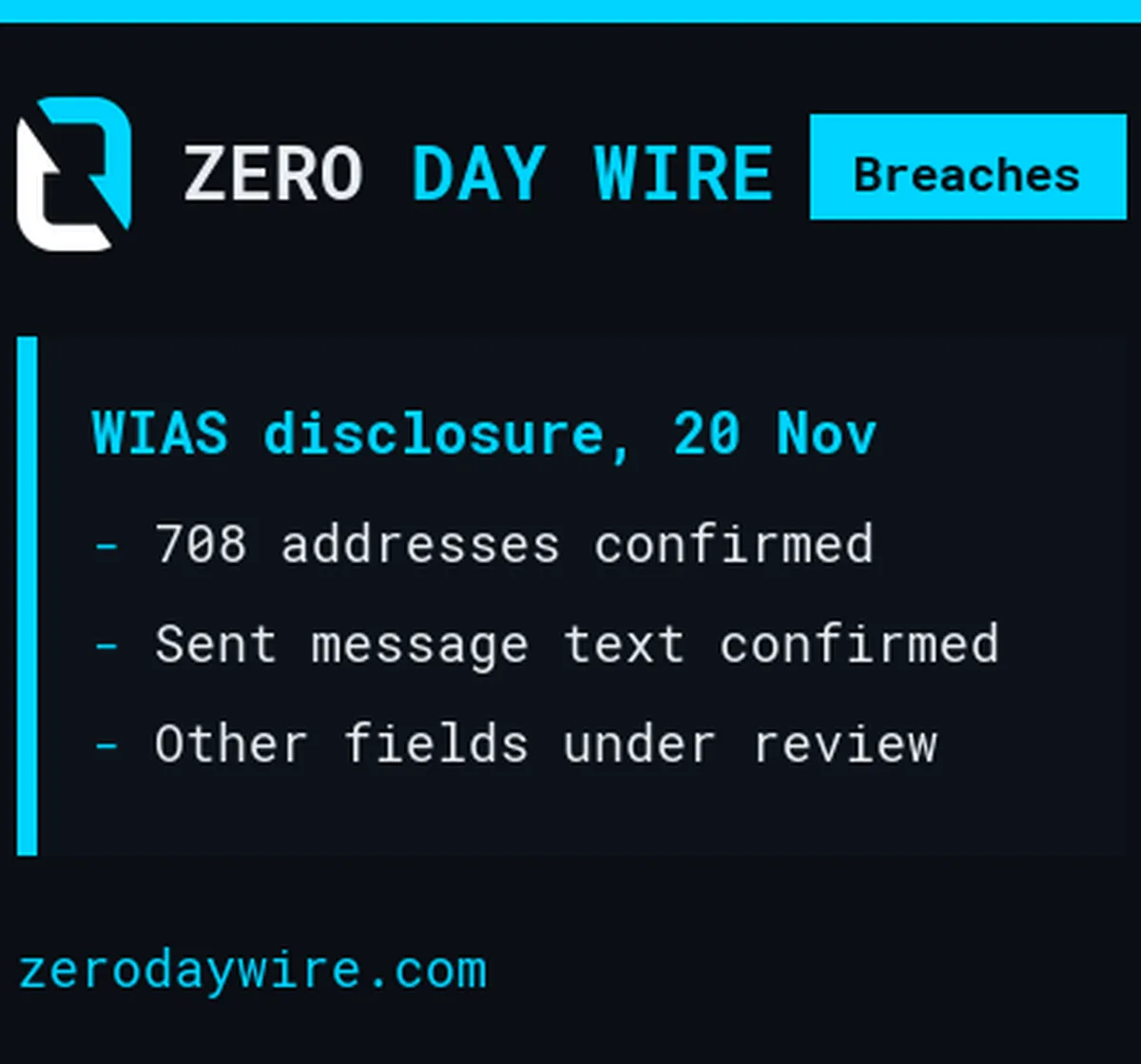
The Waseda Institute for Advanced Study had two things to tell its mailing-list subscribers on 20 November. All 708 email addresses it had registered with the Japanese bulk-mail service Mail Shonin had leaked. So had the contents of emails the institute had already distributed. Anyone checking their own organisation's exposure needs to look in two places: the subscriber register and the archive of what they sent.
The institute, known as WIAS, published its notice as well as sending individual notifications to the registered addresses. Names, affiliations and titles could also appear in its records, depending on what a subscriber had supplied. WIAS was still working out which fields had leaked for each record. The number 708 refers to addresses on its list. It says nothing about how many messages were taken or how many addresses were affected across the service.
What changed at the provider
E.M.Z., the operator of Mail Shonin, first disclosed the intrusion on 12 November. At that point it knew a third party had accessed its database. It was investigating whether information registered by users, including names and addresses, had left the system. That was the position when it first contacted WIAS.
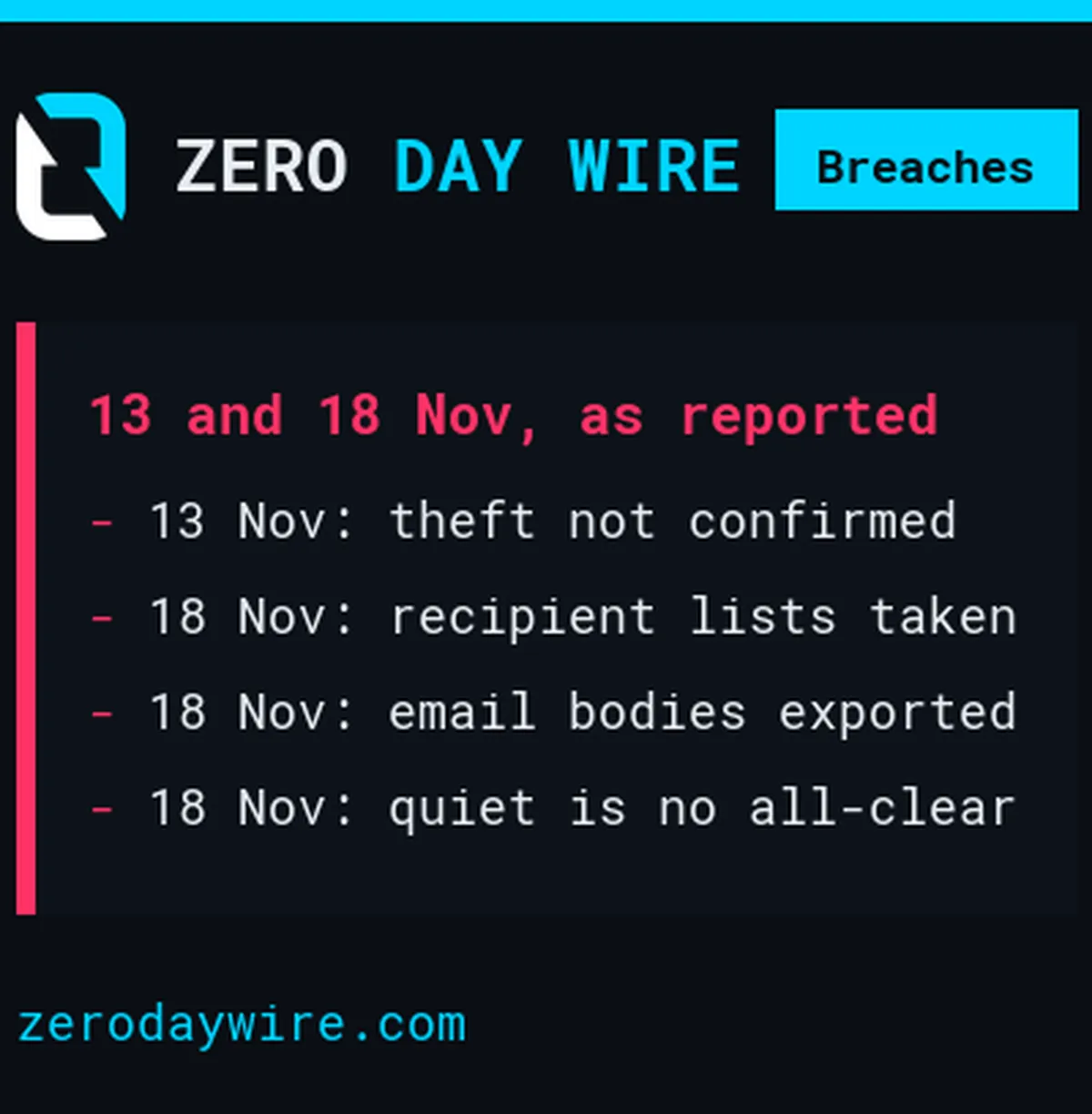
Its 13 November report put about 111,000 recipient-list entries at risk. About 64,500 belonged to E.M.Z. itself and about 46,700 to seven customer companies. Those were approximate figures. The same report separately identified 170 customer companies whose admin-screen IDs and passwords were at risk. E.M.Z. reset the relevant passwords and kept administrative logins suspended. The 170 counted customer companies with credentials at risk. It was a different population from the seven whose recipient lists appeared in that initial estimate.
On 18 November, E.M.Z. corrected its account. It had confirmed that the intruder took recipient-list data and that the text of bulk emails that customers had previously sent was exported. Those bodies included customers' commercial information. The provider said it would examine the registered recipient data of every customer. It expected the number of affected companies and records to rise significantly, but the report gave no revised total or count of exported messages.
A newsletter went out between notices
Knowledge Plaza, another Mail Shonin customer, described an awkward publishing decision in its 19 November notice. On 16 November, it said, E.M.Z. told it that its recipient list was outside the scope identified so far, that it could send mail and that the investigation was continuing. Knowledge Plaza sent its newsletter that day. After E.M.Z. broadened the scope on 18 November, Knowledge Plaza withheld publication of its 19 November issue.
Knowledge Plaza hadn't established that its own data had been taken. It had a dated, provisional answer about its list and a subsequent notice that called the answer into question. That puts it in a different position from WIAS, which had confirmation about its own addresses and messages. A sender deciding whether to run the next campaign should ask the provider whether its earlier assessment still stands and whether it covers saved messages as well as the list.
There is also a practical difference between holding the next issue and stopping a send that was already booked. E.M.Z. said on 13 November that the sending engine and open tracking were running and that mail scheduled before it suspended new bookings continued to go out. Its 18 November report did not give an updated queue status. A publisher with a booked mailing should establish whether it is still due to leave, including by asking E.M.Z. directly if dashboard access is unavailable.
Read what subscribers received
Start with the mailings your organisation actually sent. For each one, pair the final message with its recipient list. Reading a campaign name in the dashboard will tell you little about what subscribers saw. Open the sent version and check what it says about the organisation, its customers or its partners. Keep a separate record of which subscriber fields you collected. An address can be confirmed exposed while an affiliation attached to that address is still under review.
Contact E.M.Z. and ask which lists and which sent messages it has tied to your account, what remains under investigation and when it expects to update you. For the 170 companies whose admin credentials were at risk, the provider said it had already reset the relevant passwords. It also advised anyone who had reused a Mail Shonin password elsewhere to change it on the other service.
What subscribers recognise in a message matters. Knowledge Plaza warned its readers that a real name or wording lifted from an old mailing could appear in a bogus request. It advised them to check an unusual payment request or change of bank details using contact information they already use. WIAS similarly warned its readers about messages purporting to come from the institute or the university. Neither customer notice reported that a subscriber had actually made such a payment.
No notice, no all-clear
E.M.Z. said that it had blocked the identified route into the system and had seen no sign that the attack was continuing. It also cautioned that containment did not recover the information already taken. A password reset can protect future access. It cannot withdraw an address list or a campaign already exported.
For other senders, the question to put to the provider is specific: which list, which sent messages and which fields can you confirm for this account? Give subscribers the answers you have, date what is still tentative and revisit it when the provider reports back. E.M.Z. explicitly warned that a customer who had yet to receive an individual notice could still be affected.