GAO says FDA's food registry search found no cyber incidents
FDA searched five years of food registry entries, GAO reports. For a plant facing a cyber disruption, the reporting deadline turns on what it determines about the food.

The US Food and Drug Administration searched five years of entries in its Reportable Food Registry for cyber-related incidents and found none, according to a 19 November audit by the Government Accountability Office. A food processor might read that result and wonder how a ransomware attack that stops a production line could leave no trace in the registry. The answer depends on what happened to the food.
A plant can lose a shift of production without putting anyone at risk from eating the product. It can also get systems back online while a question about a batch remains open. That is why the person managing the outage and the person deciding whether the food poses a serious health risk need a way to reach each other during an incident.
What the registry measures
FDA officials told GAO that the registry covers adulterated food that presents a health risk, however the adulteration happened. The cause could be a process failure or a cyber incident. GAO gives neither the exact dates FDA searched nor the method it used to identify a cyber-related entry. The result tells us what that search found. It cannot tell a plant how often an attack has made food unsafe.
Elsewhere in the audit, GAO cites the Food and Ag-ISAC, an industry information-sharing group. It recorded 295 ransomware incidents in 2025 and 227 through July 2026. Its information comes from members, partners and reporting from publicly available sources. Those figures cover disruptions with a wide range of consequences. Subtracting the food registry's zero from either total would tell us nothing about missed reports.
Consider a manufacturer that shuts down production as a precaution. The loss of a shift matters to the business. The question for the food-safety lead is whether any food made or held at the site may endanger the people or animals that consume it. A record showing that production stopped does not, on its own, settle whether products already on the line were safe.
When the reporting clock starts
Under FDA's guidance for registered facilities, the duty rests with the responsible party for the facility that made, processed, packed or held the food. The test is whether consuming the food or being exposed to it has a reasonable probability of causing serious harm or death to a person or an animal. A facility can meet that test before anyone falls ill. Establishing who caused a disruption is a separate question.
Once the responsible party determines that the food is reportable, it must file as soon as practicable and within 24 hours at the latest, unless a specific exception applies. The clock starts with the food determination. The time of the first security alert may be important to the investigation, but it does not set this deadline.
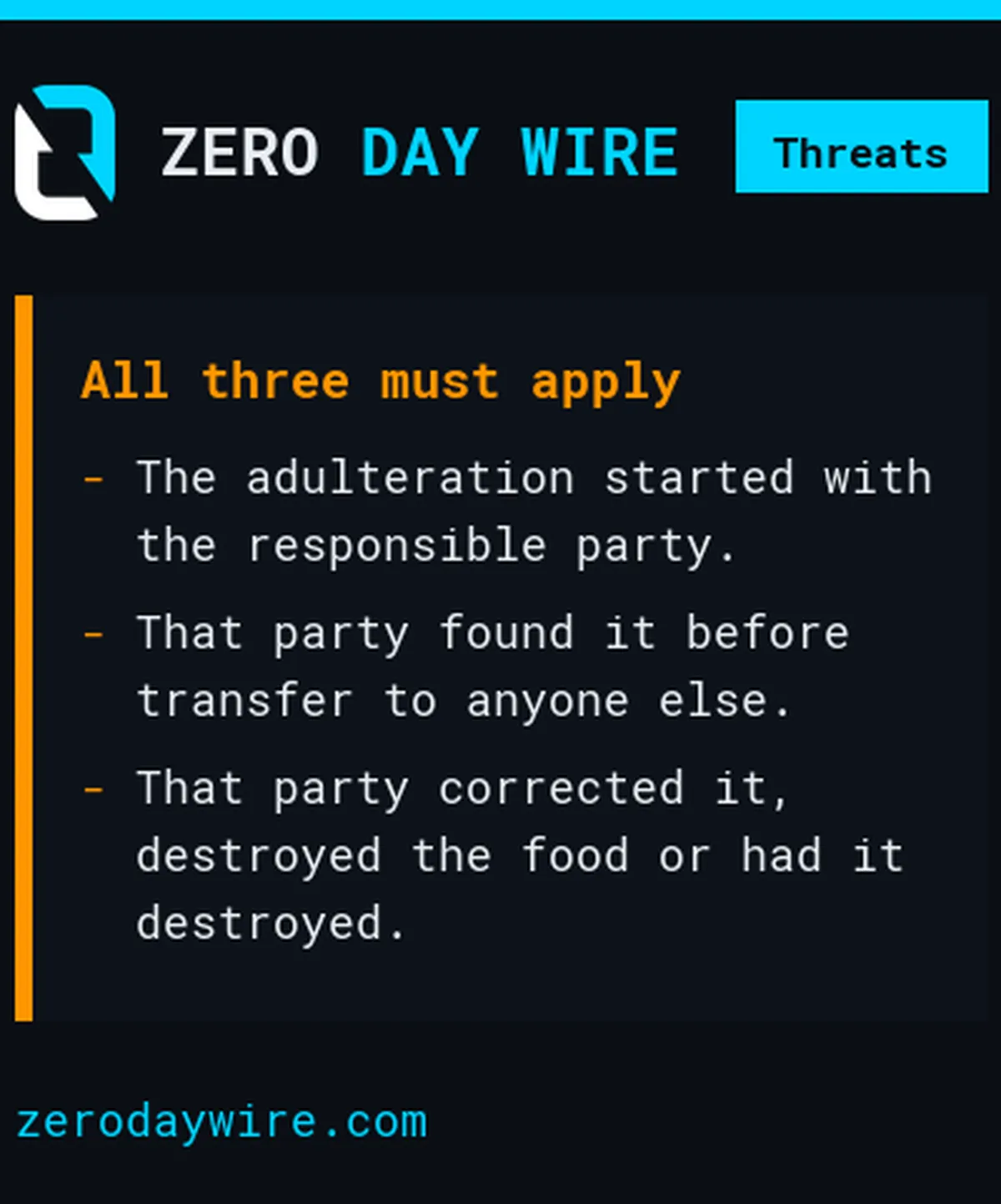
The exception has three conditions. The adulteration must have originated with the responsible party. That party must have detected it before transferring the food to another person. It must also have corrected the adulteration or destroyed the food, or had it destroyed. FDA gives a useful counterexample. If a facility receives reportable food from a supplier, its decision to hold the shipment on site does not by itself exempt it from reporting.
The registry covers FDA-regulated human and animal food, including feed. FDA lists the exclusions. Infant formula and dietary supplements have their own reporting arrangements, and products under the exclusive jurisdiction of the US Department of Agriculture fall outside this registry.
Two owners, two records
Before a disruption, name someone in food safety or quality who can assess the affected product, and a deputy who can take the call out of hours. The incident lead can establish which systems went down, when they were unavailable and which production or testing records can still be trusted. The food-safety lead can relate that evidence to the batches concerned. This is a practical division of work. The responsible party still carries the legal duty.
During an incident, record what the team knows about the food, which questions remain open, who made the determination and when. Link the decision to the incident log so a later shift can find both. If operations resume while a batch is still being assessed, the incoming team needs to know about that batch even after the IT team closes its ticket.