Margaret Mary Health decided to notify patients itself
Margaret Mary Health reviewed which patient records might have been held by a hosting provider. Seventy-seven days later, with access still unconfirmed, the hospital decided to notify patients itself.

Margaret Mary Health (MMH) had been working with its software vendor on notifying patients after an incident at a hosting provider. On 6 November, the hospital decided to contact patients itself. In its notice of 19 November, MMH said it expected letters to start going out on 20 November. The notice gives an anticipated start date and does not confirm that mailing began.
The vendor, Bridgestone Healthcare Revenue Systems, could not establish whether an unauthorised third party had accessed or acquired MMH's information. The hospital went ahead with notification despite that uncertainty.
What the hospital could establish
In July 2026, Bridgestone told MMH that a hosting provider had experienced an incident. The provider stored the hospital's data on Bridgestone's behalf. According to MMH, Bridgestone had previously provided the software infrastructure it uses to calculate patients' out-of-pocket estimates and manage structured payment plans. The notice names Bridgestone but leaves the hosting provider unnamed. It gives neither a date for the incident itself nor a count of potentially affected people.
MMH reviewed the information it might have given Bridgestone for Good Faith Estimates and Financial Assistance applications. It completed that review on 21 August. That established which kinds of information might have been involved. It still could not tell an individual patient whether anyone had seen their records.
What was at risk varied depending on the service a patient used. The hospital listed names, dates of birth, addresses, telephone numbers, tax or financial information and limited medical information connected with applications for assistance or estimates. For some people who applied for financial assistance, the records may also have included Social Security numbers or financial account information. The notice does not report misuse.
Seventy-seven days to a decision
After finishing its review, MMH worked with Bridgestone on having the vendor notify people. MMH says it decided on 6 November to send notices directly so that potentially affected people would hear in time. There were 77 days between completion of the review and that decision. The expected start of mailing was another 14 days later, for people whose contact details the hospital had.
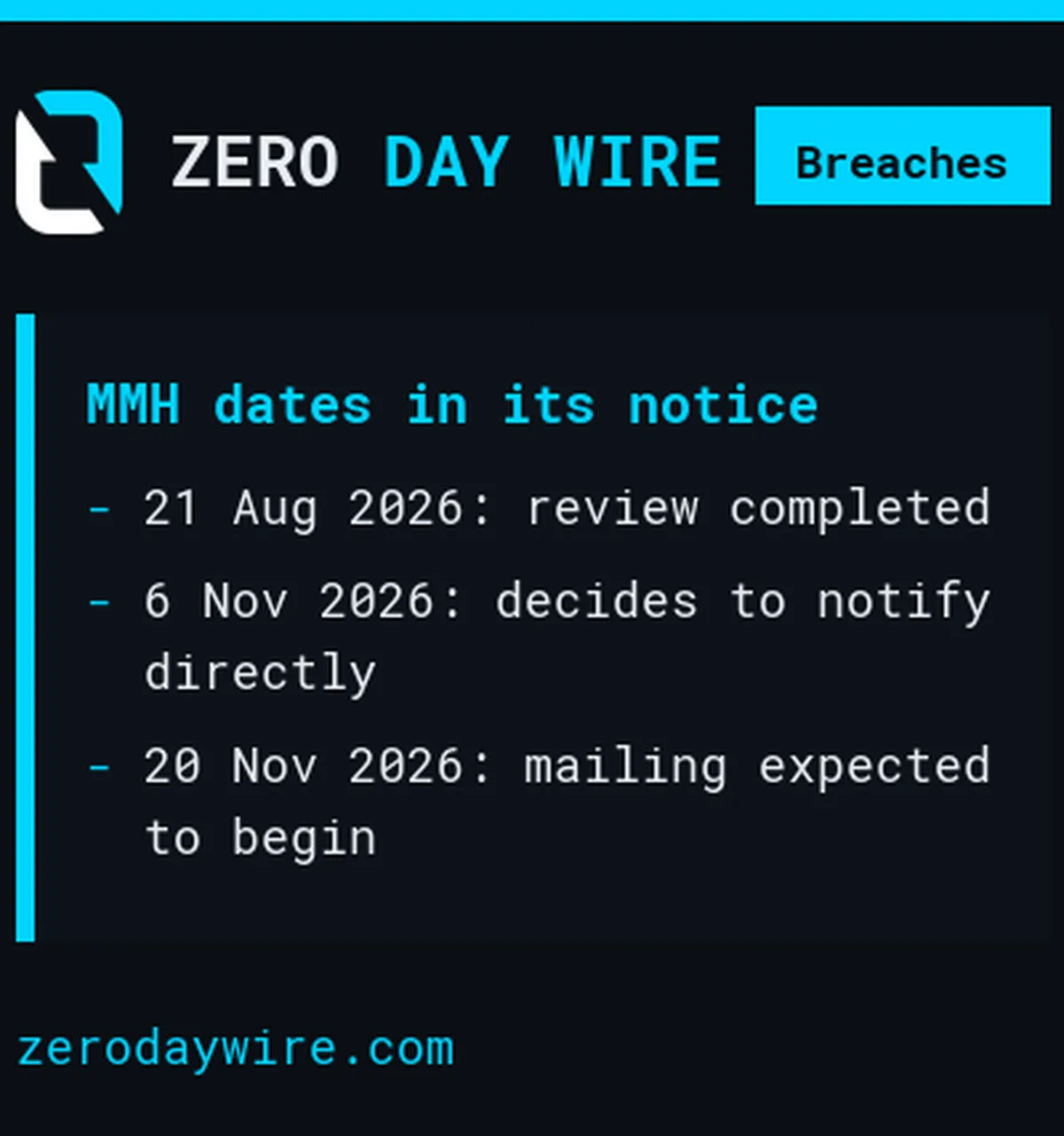
The notice does not explain what was decided between August and November or whether Bridgestone ever sent a letter of its own. Those two dates tell a privacy team how much time passed. They do not establish when any legal notification period started.
Who is responsible for the notice?
The US Department of Health and Human Services explains the distinction in its Breach Notification Rule guidance. When a breach of unsecured protected health information occurs at or by a business associate, the covered entity remains responsible for ensuring that individuals are notified. It may delegate the mailing to the business associate. The guidance suggests considering which party is best placed to contact the individuals involved.
The rule generally requires individual notification without unreasonable delay and within 60 days of discovery of the breach. MMH's public notice gives the date its review finished and the date it decided to write to patients. It does not identify either as the date a breach was discovered, say how it classified the incident under that rule, or describe Bridgestone's legal status. The 77 days cannot establish whether a deadline was met or missed.
What patients can do
MMH said the letters would explain the steps recipients could take. It recommended reviewing account statements and credit reports and arranged complimentary credit monitoring and identity theft restoration services through Cyberscout, a TransUnion company.
Current or former MMH patients who enrolled in a financial assistance plan or received a good faith estimate can call if they did not get a notice or believe they may have been affected. The hospital lists 1-877-523-5215, Monday to Friday from 8:00 a.m. to 8:00 p.m. Eastern time, excluding US national holidays.
Who mails, and by when
A vendor-risk team can settle a practical question before an incident: who decides to send a notice if the vendor still cannot establish whether anyone has accessed the data? Name that person, set a date for the decision and establish who can actually reach the people concerned.
A vendor-contract checklist from ShieldForce also suggests agreeing which party will pay for notification and how quickly the vendor must tell its customer. In MMH's case, the hospital, the software vendor and the company hosting the records were three distinct parties. A contract that accounts for all three gives the person deciding whether to write somewhere to turn for answers.