Ivanti Connect Secure needs a second patch check
Two Ivanti Connect Secure builds fixed the October entry flaw but left other exploited flaws open. Check the installed build, then look for evidence beyond the VPN's integrity scan.


If you patched Ivanti Connect Secure in October, check the build number on the appliance. The first update closed the main route into the VPN. Two builds that fixed that entry flaw still contained other vulnerabilities used in the same attacks. The Netherlands' National Cyber Security Centre confirmed the distinction in its 3 November update.
The entry flaw was CVE-2026-104935. Ivanti later identified CVE-2026-118527, which allows authenticated file upload to a known path, and CVE-2026-111357, which lets an authenticated attacker with local access escalate privileges. Those prerequisites describe the flaws in isolation. Volexity's incident investigation found that the operator it tracks as UTA0576 chained weaknesses to run commands as root without signing in. CISA added the two later-disclosed flaws to its Known Exploited Vulnerabilities Catalog on 30 October.
Which October patches need a follow-up?
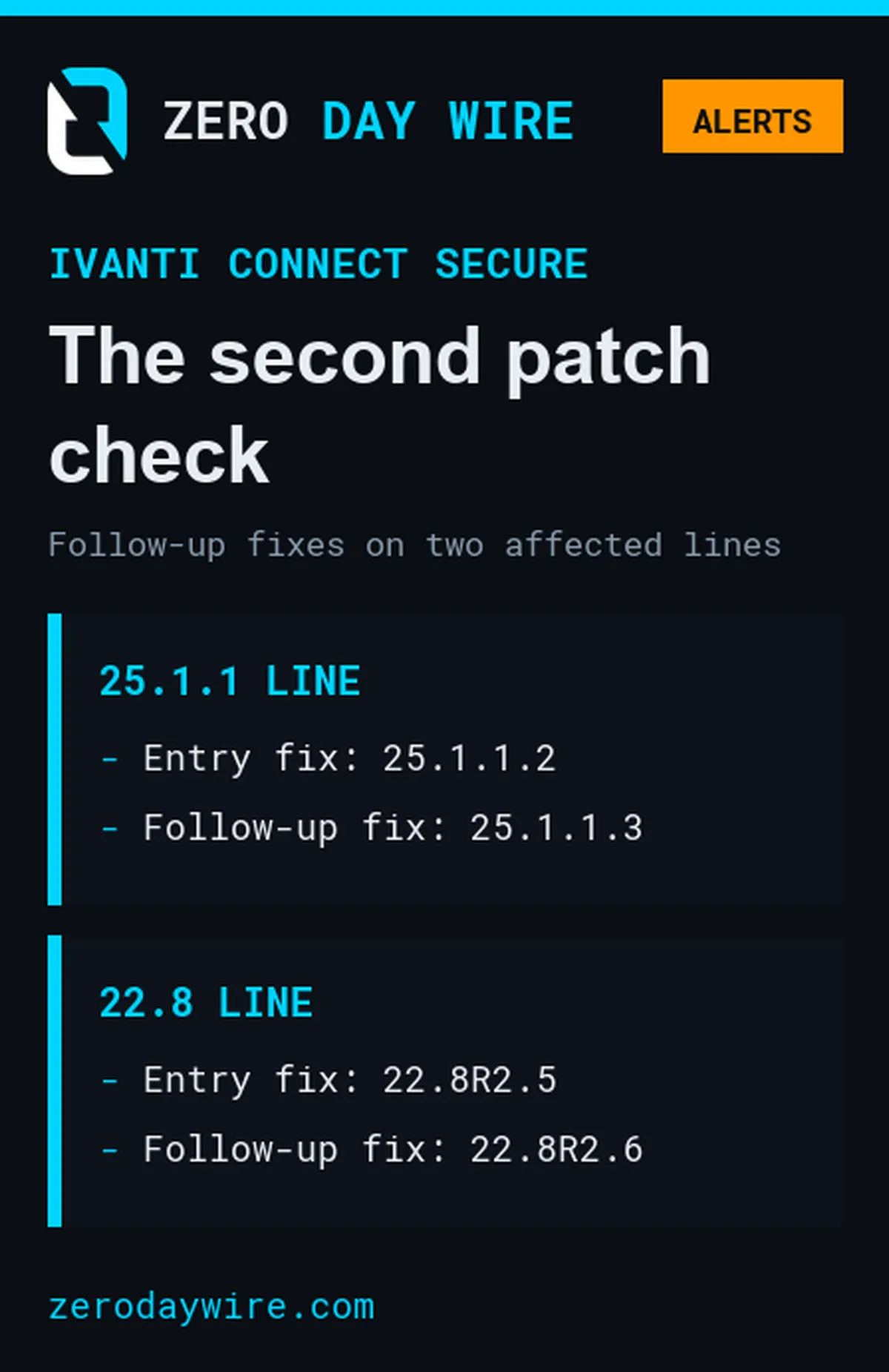
On the two affected branches, 25.1.1.2 and 22.8R2.5 were fixes for CVE-2026-104935. Both CVE-2026-111357 and CVE-2026-118527 are fixed in 25.1.1.3 on the 25.1.1 branch and 22.8R2.6 on the 22.8R2 branch, according to Rapid7's 2 November review of the updated Ivanti advisory. The two earlier builds remain vulnerable to those later-disclosed flaws.
Ivanti recommends moving from the 22.8.X line to 25.1.1.3 or later, or applying 22.8R2.6 if migration has to wait. For 25.1.2.2 and earlier on that branch, Rapid7 lists 25.1.3.0 and 25.1.3.1 as fixes for the entry flaw. Rapid7 reports that Ivanti lists 25.1.3.0 and later as unaffected on ISA4500, ISA6500 and ISA8500 hardware. The Canadian Centre for Cyber Security's broader update guidance lists 25.1.3.1 as the threshold on that line. Check the supported upgrade path for your appliance.
A clean scan leaves an open question
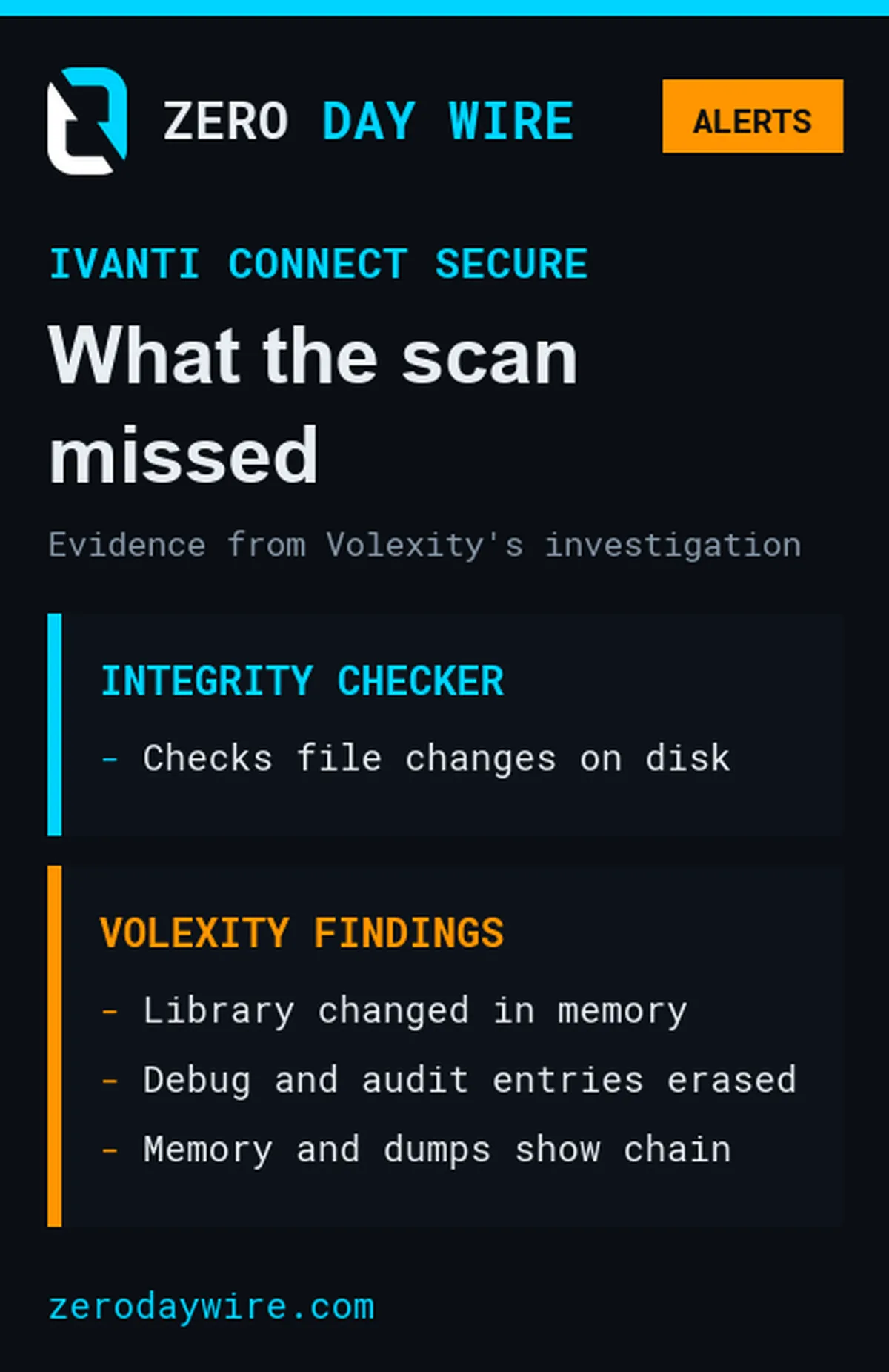
Volexity traced repeated exploitation from 3 October on an appliance running 22.8R2.4, the fully patched build at the time. The operator changed library code in memory, restored the original configuration and library state after reaching root, and deleted relevant entries from the appliance's debug and Linux audit logs. Ivanti's Integrity Checker Tool looks for unexpected changes to files on disk. Volexity says it missed the changes in this chain.
The investigation recovered evidence from memory and crash dumps. Volexity also observed the theft of credentials stored on the VPN and saw a compromised Active Directory service account used to look for Windows LAPS passwords and BitLocker recovery keys. If your VPN was exposed on an affected build, carry the investigation into the systems that trusted those credentials.
Action Items
- Read the installed build on every appliance. Apply the current supported release for its branch and hardware. Treat an October ticket closed on
25.1.1.2or22.8R2.5as due for another check. - Preserve evidence where feasible before a reboot or reset. Coordinate urgent patching with incident response so responders can retain memory, logs and crash dumps when available. Correlate off-appliance network and identity records with signs of lateral movement from the VPN.
- Follow Ivanti's recovery guidance if you suspect compromise. Scope and rotate potentially exposed credentials, including directory service accounts used by the appliance, and review their use in downstream systems.
Close the patch ticket when the fixed build is running. Close the incident investigation on the evidence you recover from the VPN and the systems it could reach.