BeautyStealer can take the VPN profile and delete itself
Gorbag's BeautyStealer can collect VPN profiles, browser data and files from reachable drives, then remove itself. Check what the endpoint could expose and which credentials can still be used.

An infected Windows PC can lose its VPN profile, browser sessions and documents in one pass. Then the program that took them can delete itself. For a responder, the question is what the machine could reach while BeautyStealer was running.
ESET's 3 November report tracks the stealer to Gorbag, a Russia-aligned espionage group active since at least February 2025. All the targets ESET identified were in Ukraine. They included law enforcement and justice bodies, local authorities near the front line, defence organisations and a transport hub for foreign military aid.
A VPN profile can carry a key
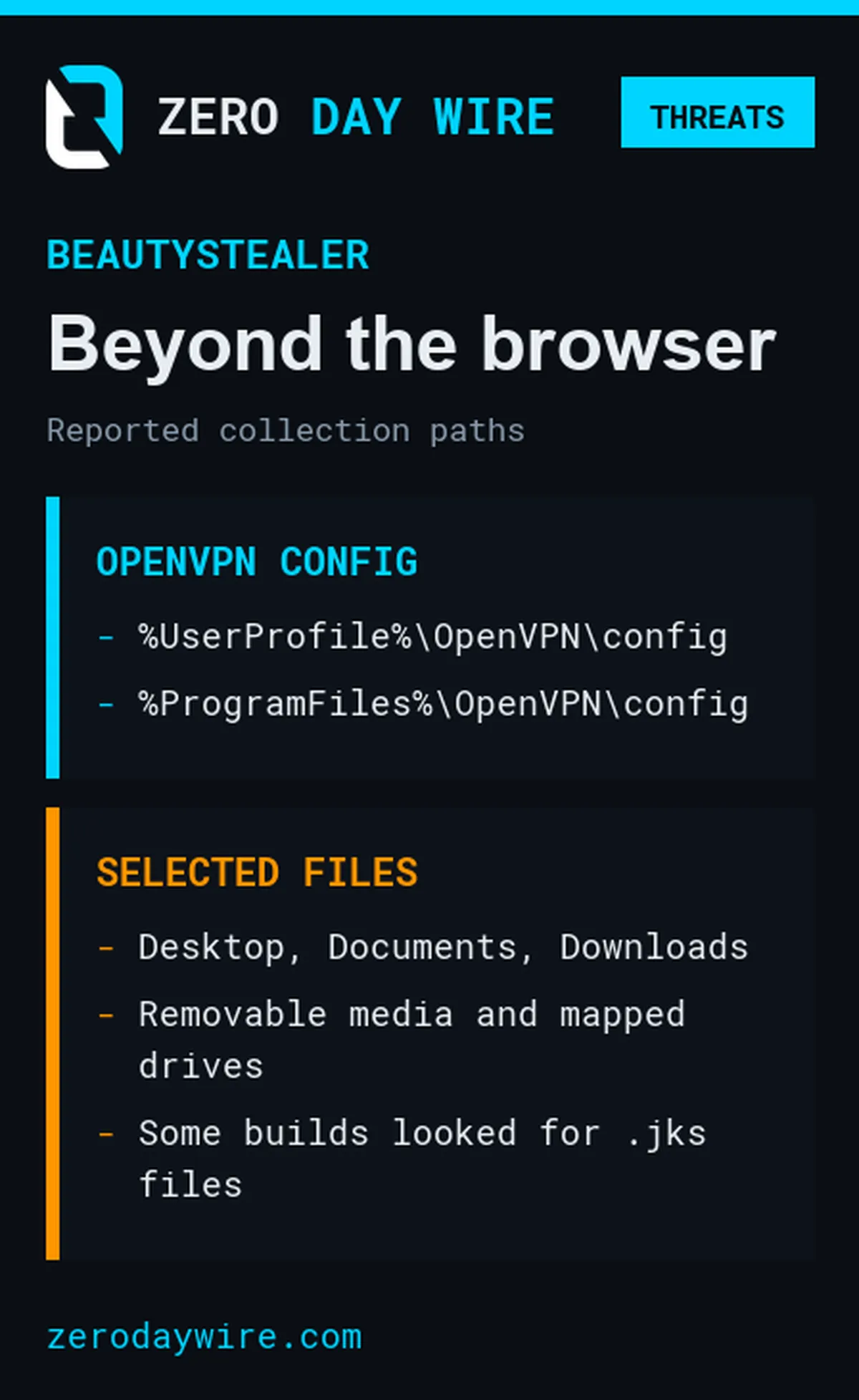
The earliest BeautyStealer samples ESET analysed concentrated on browser credentials. Later versions reached into local folders, removable media and mapped network drives for files matching particular extensions. That puts a file saved to a shared drive within reach of the stealer if the infected account could read it.
ESET's technical paper lists two places to check for OpenVPN material: %UserProfile%\OpenVPN\config and %ProgramFiles%\OpenVPN\config. An .ovpn file can be a connection recipe. It can also contain a client certificate and private key, as the OpenVPN manual describes. Establish what each exposed profile contained before deciding which credentials to replace.
The file filters also include .kdbx password databases and .zs2 files used for Ukrainian electronic signature keys. ESET identified these as collection targets. A targeted password database can still be encrypted, and the file filters alone cannot tell you which files left a particular endpoint.
The shortcut can run again
Gorbag delivered BeautyStealer through a macro-enabled spreadsheet in one case. In early 2026 it began sending crafted RAR archives that exploited CVE-2025-8088. On a vulnerable Windows system, a decoy PDF distracts the recipient while extraction places a shortcut in the Windows Startup folder and leaves a PowerShell loader and encrypted payload under %ProgramData%. The shortcut can launch the loader at a later sign-in. WinRAR 7.13 fixed the flaw.
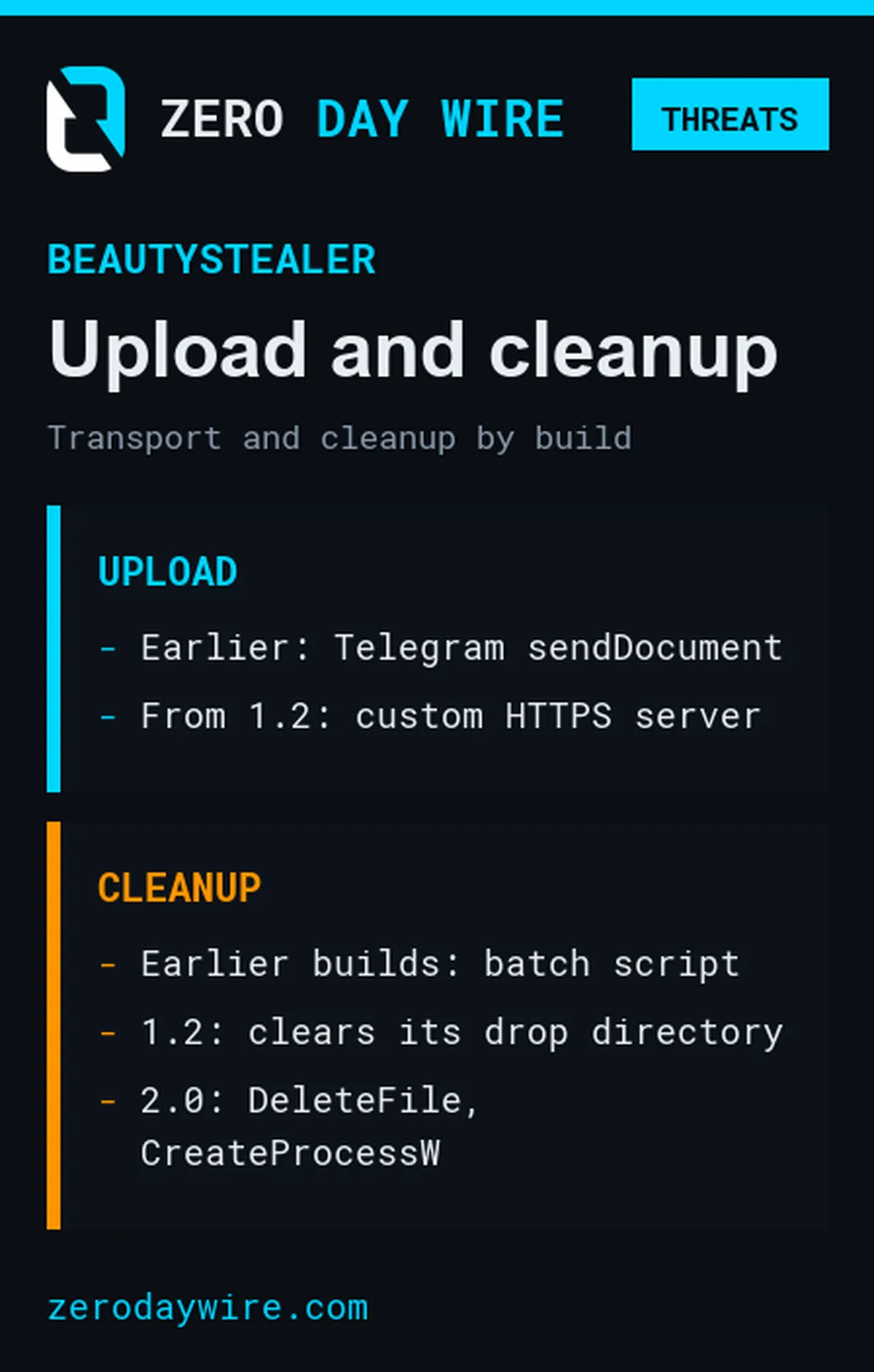
BeautyStealer compresses the collected data before uploading it. Earlier builds sent the archive to Telegram. From version 1.2, ESET observed uploads to a custom server. Earlier builds used a batch script for cleanup. Version 2.0 uses Windows API calls, so a hunt built around the old batch file can miss the newer variant.
Trace the stolen keys
If you find a matching lure or Startup shortcut, preserve the email, shortcut, process history and outbound connection records. Check the loader and payload paths even when the stealer is gone. Look for connections around the suspected run, then review which drives and VPN profiles the affected account could read. A missing binary cannot establish whether an upload succeeded.
For confirmed or credibly exposed access material, invalidate affected browser sessions where supported. Revoke and replace any exposed VPN client certificates, and involve the signing-key issuer where relevant. Review later VPN and identity logs for reuse. ESET suggests Gorbag might pass credentials to other groups, but its published evidence leaves that hand-off unconfirmed. The VPN gateway can still accept a stolen client key after the malware has stopped running.